
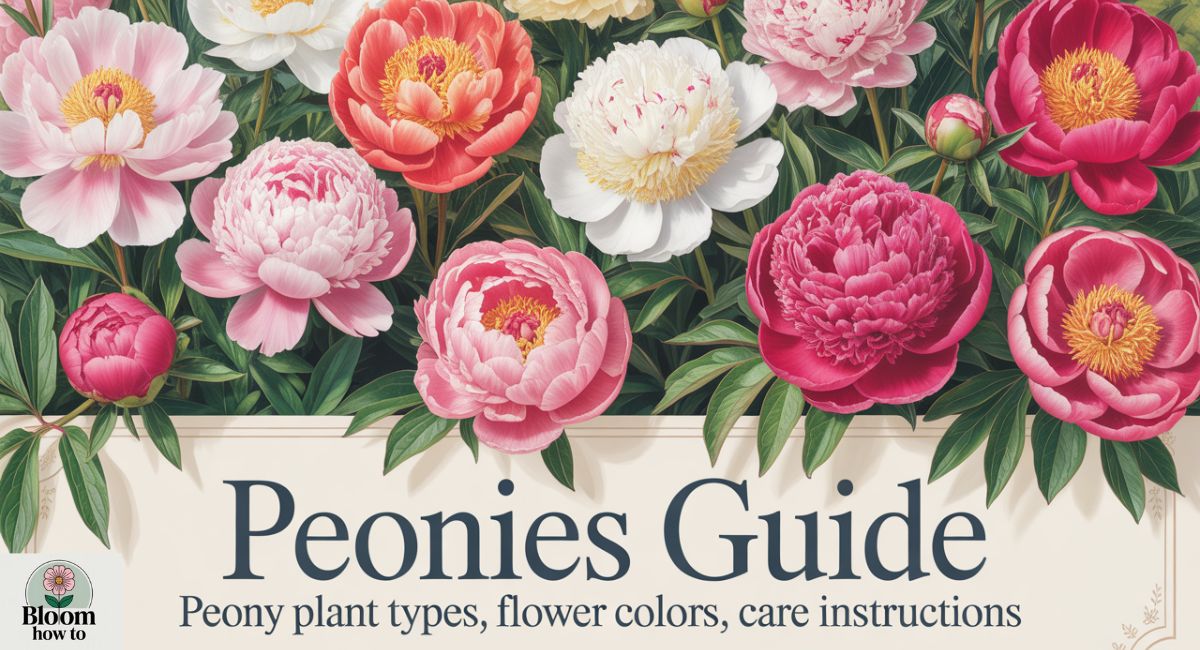
Welcome to the ultimate Peonies Guide, where you’ll discover everything about these beloved flowers. Peonies are treasured in gardens across the USA for their stunning peony flowers and long-lasting blooms. This guide will help you understand different peony plant types, their beautiful flower colors, and how to care for them so they thrive year after year. Whether you’re planning to grow peonies at home, use them in wedding bouquets, or simply enjoy their seasonal charm, this Peonies Guide has practical tips, expert advice, and unique insights. By the end, you’ll feel confident choosing, planting, and caring for peonies with ease.
2. Peony Plant Types
Herbaceous Peony Plants

Herbaceous peonies are the most common type found in the USA. These peony plants die back to the ground every winter and return in spring. They live for decades and bloom more each year. Most home gardeners start with this reliable type.
Tree Peonies

Tree peonies grow woody stems and look like small shrubs. Unlike other peony plants, they do not die back in winter. Their flowers are larger and appear earlier in the season. They prefer mild climates and protected garden spots.
Itoh (Intersectional) Peonies

Itoh peonies combine the strength of herbaceous peonies with the beauty of tree peonies. These peony plants have strong stems and huge blooms. They resist disease better and bloom longer. Many modern gardeners love them for low maintenance.
| Peony Plant Type | Growth Style | Best For |
| Herbaceous | Dies back yearly | Cold climates |
| Tree | Woody shrub | Mild regions |
| Itoh | Hybrid | Modern gardens |
3. Peony Flower Colors and Forms
Common Peony Flower Colors

Peony flower colors include white, pink, red, coral, and yellow. Pink remains the most popular in the USA. White peonies suit formal settings, while coral shades feel fresh and modern.
Peony Flower Forms

Peony flowers grow in different shapes. Some have a single row of petals, while others form full, fluffy blooms. Double forms look dramatic, while single forms attract pollinators.
Choosing Colors and Forms
Gardeners choose colors based on mood and space. Florists pick forms that match event style. This Peonies Guide helps you match color and form to your needs.
| Flower Form | Appearance | Best Use |
| Single | Open center | Pollinators |
| Semi-Double | Layered petals | Gardens |
| Double | Full and round | Weddings |
| Bomb | Dense center | Displays |
4. Peonies Blooming Season
In most of the USA, peonies blooming season begins in late April and ends by early June. Southern states see blooms earlier, while northern regions bloom later. Many gardeners plant different varieties to extend the season.
Bloom time also depends on weather and sunlight. Cool nights help peony buds open slowly and last longer. Once cut, peony flowers can stay fresh indoors for almost a week. This Peonies Guide encourages planning ahead so you never miss peak bloom.
5. Peonies Care Instructions
Peonies care stays simple once plants settle in. They love full sun, well-drained soil, and deep planting roots. Too much fertilizer causes leaves but fewer flowers. Most problems come from planting too deep or overwatering.
After blooming, leave the leaves alone. They store energy for next year. In fall, cut herbaceous peonies to ground level. This Peonies Guide proves that peonies reward patience. Treat them right, and they bloom bigger each season.
| Care Need | Best Practice |
| Sunlight | 6–8 hours |
| Water | Moderate |
| Soil | Well-drained |
6. Peonies in Wedding Arrangements

Peonies in wedding arrangements symbolize romance and good fortune. Brides love their soft petals and full shape. Florists often use peonies as the main flower because one bloom fills a bouquet beautifully.
Season matters when planning weddings. Fresh peonies appear mostly in spring, so summer weddings often rely on imported blooms. This Peonies Guide helps couples plan realistic designs without surprises.
7. Pet Safety and Toxicity
Many pet owners ask if peonies are safe. Peonies toxic to cats is a common concern. Peonies contain compounds that may upset a cat’s stomach if eaten. Dogs may react the same way, though serious harm is rare.
Keep plants out of reach if pets chew leaves. This Peonies Guide recommends awareness, not fear. Most pets avoid peonies naturally, but supervision keeps everyone safe.
8. Where to Buy Peonies
Finding quality plants matters. Where to buy peonies depends on timing and location. Local nurseries offer fresh roots suited to your climate. Online stores provide rare varieties but ship seasonally.
Buying in fall gives roots time to settle before winter. Cut flowers appear in grocery stores during peak season. This Peonies Guide encourages checking plant health before buying to avoid weak blooms.
| Buying Option | Best Time |
| Nurseries | Fall |
| Online | Early fall |
| Florists | Spring |
9. Popular Peony Varieties
Sarah Bernhardt Peony

The Sarah Bernhardt peony is famous for its soft pink, ruffled blooms. It has a gentle fragrance and works well in gardens and bouquets. This variety blooms mid-season and handles cold winters well.
Coral Charm Peony

Coral Charm peony opens with bright coral petals that fade to peach. It blooms early and stands out in spring gardens. Its strong stems make it ideal for cutting and floral designs.
White and Yellow Peony Varieties

White peonies look elegant and clean, especially in weddings. Yellow peonies are rarer and often belong to Itoh types. Both varieties add contrast and brightness to gardens.
| Peony Variety | Color | Bloom Time |
| Sarah Bernhardt | Pink | Mid-season |
| Coral Charm | Coral | Early |
| Festiva Maxima | White | Mid-season |
| Bartzella | Yellow | Mid to late |
10. Conclusion
Peonies bring beauty, history, and ease into gardens and events. This Peonies Guide shows how choosing the right plant, color, and care routine leads to long-term success. From gardens to weddings, peonies never disappoint.
With simple care and smart buying, peonies reward you for decades. Let this Peonies Guide help you grow flowers that feel timeless, generous, and joyful every spring.
FAQs
1. What are the main types of peony plants?
The main types are herbaceous peonies, tree peonies, and Itoh (intersectional) peonies, each with unique growth habits and bloom styles.
2. When do peonies bloom in the USA?
Most peonies blooming season occurs between late April and early June, depending on climate and variety.
3. Are peonies safe for pets?
Peonies can be toxic to cats and dogs if ingested, so keep plants out of reach to prevent stomach upset.
4. How do I care for peonies?
Provide full sun, well-drained soil, moderate watering, and prune after flowering for long-lasting blooms.
5. Where can I buy healthy peony plants?
You can buy peony plants and bulbs from local nurseries, online stores, and garden centers in the USA.

Welcome to bloom how to! I’m Anam Sattar, an AI Powered SEO, and Content Writer with 4 years of experirnce.
I help websites rank higher,grow traffic, and look amazing. My goal is to make SEO and web design simple and effective for everyone.
Let’s achieve more together!