
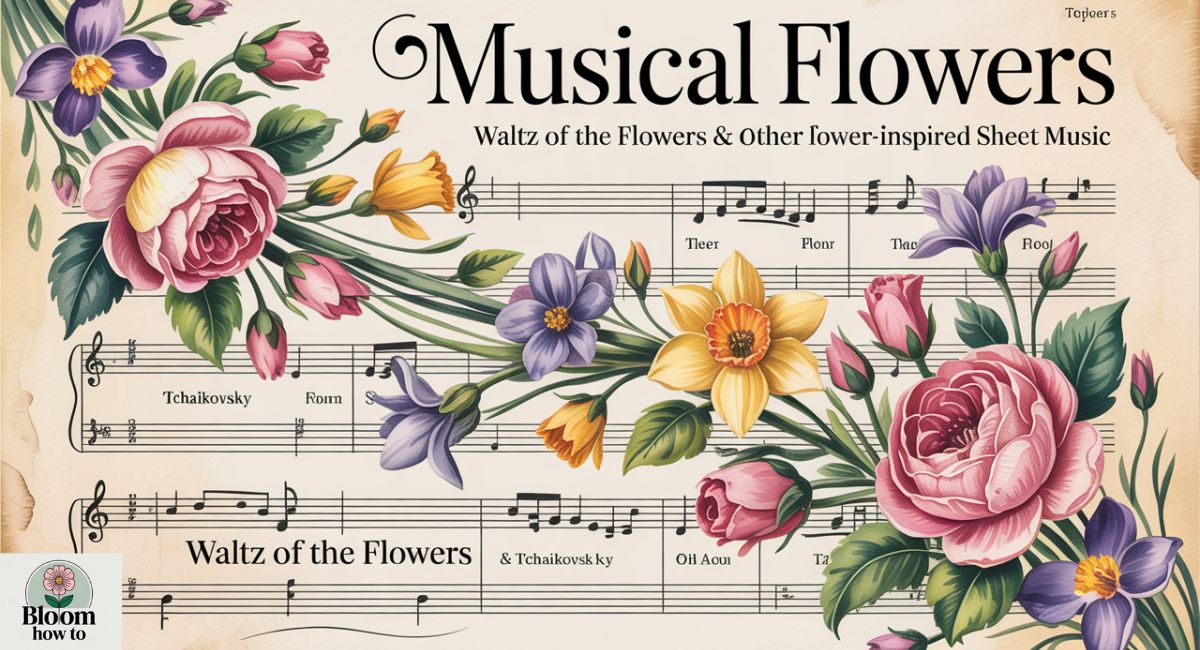
Music and nature have always shared a quiet bond. When sound meets symbolism, something memorable is created. Musical Flowers: Waltz of the Flowers & Other Flower-Inspired Sheet Music with Music Notes brings together melody, emotion, and visual beauty in a way that feels natural and timeless. From classical concert halls to home practice rooms, musical flowers continue to inspire musicians across the United States. Famous works like waltz of the flowers sheet music show how composers turn floral movement into sound. Beyond performance, music notes with flowers add artistic value to programs and designs. This focus keyword reflects how music and flowers connect deeply, shaping expressive and meaningful musical experiences.
2. Musical Flowers: The Inspiration Behind Floral Music
Flowers have inspired art for centuries. Music is no exception. When composers think about flowers, they often imagine movement. Petals sway. Stems bend. Colors shift with light. These ideas translate naturally into rhythm, melody, and harmony. That is the heart of musical flowers.
Many classical composers used flowers to express emotion without words. Soft dynamics reflect delicate petals. Rising phrases mirror growth. Repeating motifs suggest seasonal cycles. Even modern composers continue this tradition. Floral themes help listeners feel calm, reflective, or hopeful. In the United States, this emotional clarity makes floral music popular in education and therapy.
Why Flowers Translate So Well Into Music Notes
Flowers follow patterns. Music does too. Both rely on balance. When composers align music notes and flowers, the result feels intuitive. A blooming melody feels natural. A fading chord feels like falling petals. This connection explains why floral music feels easy to understand, even for beginners.
A music educator once said, “Students play better when they can picture something beautiful.” That beauty often comes from flowers. Visual imagination improves musical expression. This is why music notes with flowers appear so often in teaching materials and performance programs.
3. Waltz of the Flowers A Floral Masterpiece

Few pieces represent musical flowers better than Waltz of the Flowers. Pyotr Ilyich Tchaikovsky composed it for The Nutcracker ballet in 1892. From the first harp glissando to the sweeping final chord, the piece feels alive.
In the United States, Waltz of the Flowers is a seasonal tradition. Orchestras perform it every winter. Ballet companies rely on it. Piano students dream of mastering it. Waltz of the flowers sheet music remains one of the most searched classical scores in the country.
The music flows in triple time, like petals spinning in the air. The melody feels joyful but refined. This balance explains why the piece works equally well for professionals and students. It is complex enough to challenge, yet melodic enough to inspire.
4. Waltz of the Flowers Sheet Music Variations
Waltz of the Flowers stays popular because it adapts beautifully to different instruments and skill levels. Musicians in the United States use these variations in lessons, recitals, and large performances. Each version keeps the floral character alive while serving a different musical purpose. This flexibility is what makes waltz of the flowers sheet music a core part of musical flowers repertoire.
Teachers and performers often choose an arrangement based on age, experience, and setting. Some versions focus on learning basics. Others highlight expression and stage presence. Together, these adaptations allow music and flowers to reach beginners and professionals alike.
Easy Piano Version

The easy piano version simplifies rhythms and hand movement while keeping the main melody clear. Beginners feel confident playing it early in their training. This version is common in American music schools because it builds musical expression without overwhelming the student. It introduces musical flowers gently and encourages steady progress.
Advanced Piano Solo

Advanced piano arrangements include fuller harmonies and wider hand spans. They demand control, balance, and musical maturity. Pianists often choose this version for recitals because it sounds rich and dramatic. Waltz of flowers piano sheet music at this level allows performers to fully express the floral elegance of the piece.
Violin Solo Version

The violin solo version highlights lyrical phrasing and smooth bowing. Intermediate players use it to develop tone and musical storytelling. In concerts, this arrangement feels graceful and emotional. Waltz of the flowers violin sheet music works especially well with piano accompaniment in live performances.
Full Orchestra Score

The orchestral version brings the music to life on stage. It combines strings, winds, and harp to create a blooming soundscape. Ballet companies rely on this score every winter. This arrangement shows the full power of music notes and flowers working together.
| Arrangement Type | Skill Level | Primary Instrument | Common Use |
| Easy Piano Version | Beginner | Piano | Student practice |
| Advanced Piano Solo | Advanced | Piano | Recitals |
| Violin Solo Version | Intermediate | Violin | Concert performance |
| Full Orchestra Score | Professional | Orchestra | Ballet productions |
These arrangement types ensure that waltz of the flowers sheet music remains relevant, flexible, and inspiring for every kind of musician.
5. Other Flower-Inspired Sheet Music
While Waltz of the Flowers stands out, it is not alone. Many composers write music inspired by flowers. Some focus on mood. Others tell personal stories. Flowers Samantha Ebert piano sheet music is a modern example that resonates with today’s players.
This piece feels intimate and emotional. It uses simple harmonies and expressive phrasing. Students often connect deeply with it. Teachers appreciate how it encourages musical storytelling. This shows how sheet music flowers themed compositions continue to evolve.
Classical collections also include lesser-known floral works. These pieces often appear in teaching anthologies. They expand repertoire while keeping emotional accessibility. For musicians seeking variety, floral music offers endless inspiration.
6. Music Notes with Flowers Visual & Artistic Use

Music does not live only in sound. It lives on paper, screens, and stages. Visual design plays a major role in how music feels. Music notes with flowers combine structure with softness. This contrast attracts attention and creates emotional warmth.
In the United States, designers frequently use flowers and music notes on recital programs, album covers, and educational materials. Floral visuals reduce intimidation. They invite audiences in. Students feel less pressure. Performers feel more relaxed.
A study in music education design showed that students performed more confidently when programs included calming imagery. Flowers ranked highest. This explains why music notes and flowers remain popular in visual branding.
7. Musical Flowers for Programs & Events
Event planning often relies on themes. Musical flowers for programs offer flexibility and elegance. They work for formal concerts and casual recitals alike. Spring performances often feature floral designs. Weddings favor soft musical flowers. School events benefit from friendly visuals.
Teachers across the U.S. use musical flowers themes to create positive environments. Programs feel thoughtful. Audiences feel engaged. Students feel proud. This emotional impact matters as much as technical performance.
8. Where to Find Flower-Inspired Sheet Music
Access matters. Fortunately, American musicians have many options. Websites like musicnotes.com and sheetmusicplus.com offer licensed editions of waltz of the flowers sheet music and many floral-themed works.
Free sheet music exists online, but quality varies. Legal editions ensure accurate notation and fair support for composers. For teachers and performers, reliable sources save time and reduce stress. Investing in proper sheet music flowers themed scores improves results.
9. Conclusion
Music grows like a flower. It starts small. It develops over time. It leaves an impression long after the sound fades. Musical Flowers: Waltz of the Flowers & Other Flower-Inspired Sheet Music with Music Notes captures this journey beautifully.
From classical masterpieces to modern piano works, floral music continues to inspire. Whether you play, teach, design, or listen, these pieces offer calm, expression, and connection. Let the notes bloom. Let the music breathe.
FAQs
1. What is “Musical Flowers: Waltz of the Flowers & Other Flower-Inspired Sheet Music with Music Notes”?
It is a collection of sheet music inspired by flowers, including Tchaikovsky’s Waltz of the Flowers and other floral-themed compositions.
2. Who can play flower-inspired sheet music?
Beginners, intermediate, and professional musicians can all enjoy floral sheet music, with versions available for piano, violin, and orchestras.
3. Where can I find sheet music for Waltz of the Flowers?
Licensed versions are available on sites like Musicnotes and Sheet Music Plus.
4. How are music notes and flowers connected in sheet music design?
Designers often combine floral visuals with musical notation to create elegant, calming, and engaging program materials or covers.
5. Can flower-inspired music be used in events and programs?
Yes, it’s perfect for school recitals, weddings, seasonal concerts, and any program where musical flowers add beauty and charm.

Welcome to bloom how to! I’m Anam Sattar, an AI Powered SEO, and Content Writer with 4 years of experirnce.
I help websites rank higher,grow traffic, and look amazing. My goal is to make SEO and web design simple and effective for everyone.
Let’s achieve more together!